22298, Aero-Compax, Steel
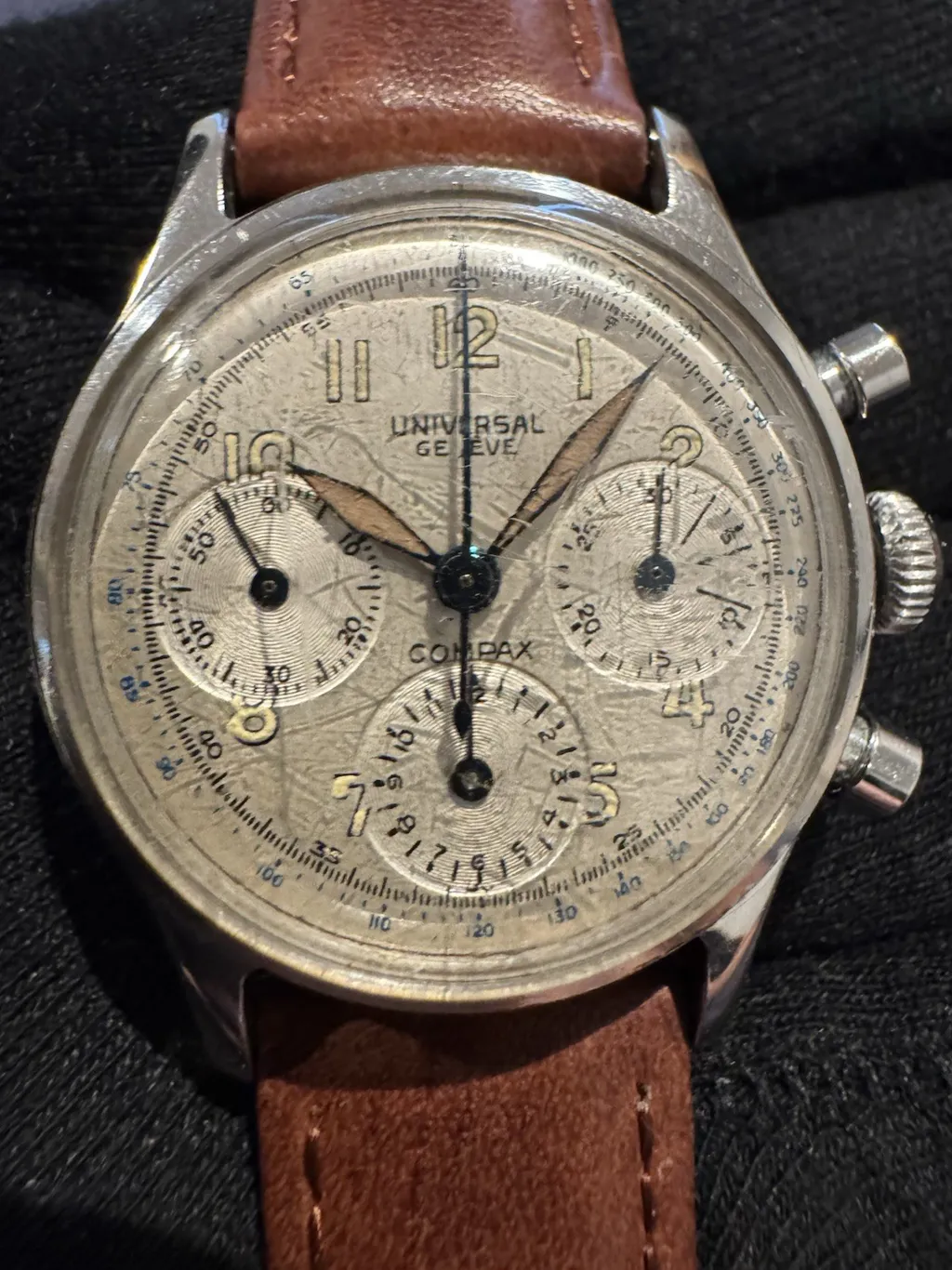
A ref. 22289 Aero-Compax, a 35mm chronograph in steel with a ‘reference time’ complication in the 12 o’clock subdial set via an independent left-hand crown. The reference time was demanded by WWII pilots, who needed to track more than a simple chronograph could manage, such as elapsed mission time plus time to target. Shown here with sword hands and an eggshell patina dial, this is a mid-century aviation aesthetic not many watches can match.
, This watch is modeled on a relatively large 7.7 inch wrist.
Brand: Universal Genève Model: Aero-Compax Reference: 22298 Size: 35 Year: c. 1940 Case Material: Steel Movement: Manual Calibre 281 Scope: Watch Only22298, Aero-Compax, Steel
$
9,800
A ref. 22289 Aero-Compax, a 35mm chronograph in steel with a ‘reference time’ complication in the 12 o’clock subdial set via an independent left-hand crown. The reference time was demanded by WWII pilots, who needed to track more than a simple chronograph could manage, such as elapsed mission time plus time to target. Shown here with sword hands and an eggshell patina dial, this is a mid-century aviation aesthetic not many watches can match.
In their day, Universal Genève were a force to be reckoned with, truly a horological innovator. In that era, the ref. 22289 Aero-Compax (short for Aviator’s compact chronograph) was one of the most technically sophisticated and usable chronographs the world had seen, released 1941. Like many great advances, it was born out of necessity in WWII. Pilots had chronographs, but often needed to track more than just elapsed time. The register at 12 is what’s known as a reference time, intended to be set like an elapsed start-of-mission timer. Today, it can function like a GMT, secondary chronograph set via crown, or whatever else your standard time plus chronograph can’t manage. The complication is surprisingly usable day-to-day.
The Aero-Compax evolved over four decades through a range of designs and eventually lost the reference time to a bezel. But there is an obvious visual appeal to the early 35mm steel examples, particularly with their quad subdial arrangement. The quad register is not just limited to QPs, but applies here as well: total vertical and horizontal symmetry on a light eggshell patina dial. It’s the same reason a moonphase Tri-Compax works so well. The 22289 here uses sword hands, a classic mid-century aviator and slightly mil-aesthetic. All with totally factory proportions, that caseback engraving is properly deep. It’s just that tiny bit more subtle than a 36 or 38mm Tri-Compax on wrist.
Inside beats a manual calibre 281, with Breguet hairspring and column wheel. This UG just has twenty years to go to mark its centennial. I have no doubt that it will reach one hundred only to carry on serving its duty perfectly. Right around the time the Vatican crumbles, it might start losing a few seconds per day. No surprise Henri Stern’s agency retailed them in period, even Hermes wanted to ‘collab’ (really, google UG Pour Hermes). Many cult watches are simply shells of hype. Universal really aren't.
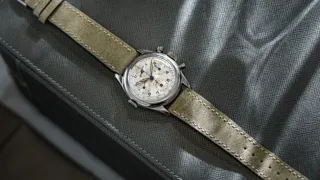
This example is in excellent overall condition. Its case is full, in our opinion very likely never polished. The serial and reference numbers on caseback are extremely deep. The dial shows light signs of patina but is entirely original and sporting a light eggshell tone. The dial's radium is dark and still entirely present. The handset has been professionally relumed to match the dial in its past as the radium fell entirely out. The movement was serviced recently and is running well in spec. It comes on the pictured grey suede strap.
This watch is modeled on a relatively large 7.7 inch wrist.
Brand: Universal Genève Model: Aero-Compax Reference: 22298 Size: 35 Year: c. 1940 Case Material: Steel Movement: Manual Calibre 281 Scope: Watch Only