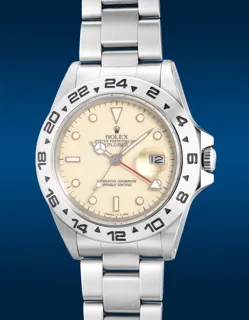
Ref. 16550A rare and attractive stainless steel dual-time wristwatch with center seconds, date, 24-hour indication, “cream” rail dial, bracelet, guarantee and presentation box
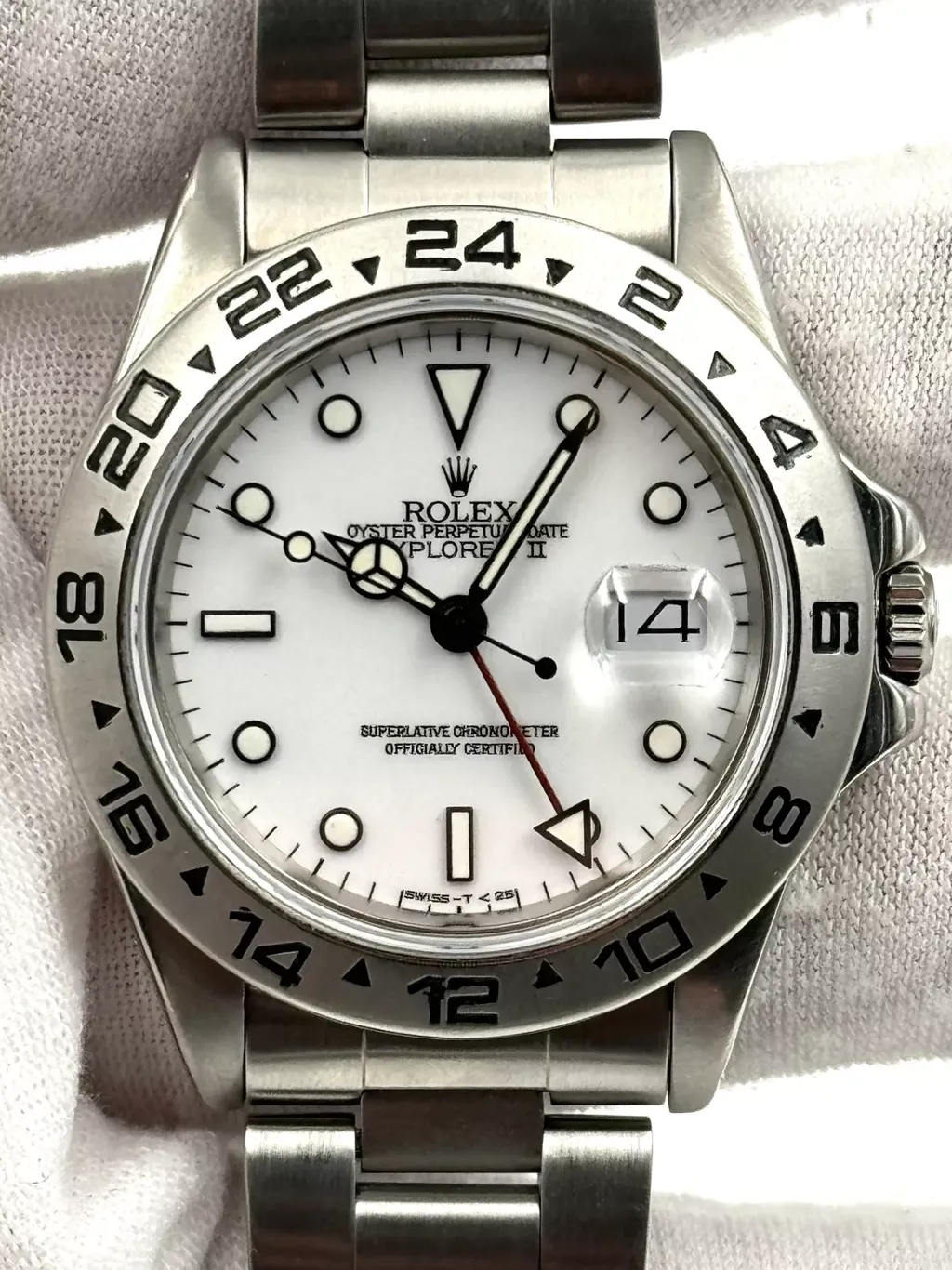
Manufacturer: Rolex Year: Circa 1986 Reference No: 16550 Movement No: 1’495’943 Case No: 9’069’719, 16550 repeated inside caseback Model Name: Explorer II Material: Stainless steel Calibre: Automatic, cal. 3085, 27 jewels Bracelet/Strap: Stainless steel Rolex Oyster bracelet stamped “78360”, endlinks stamped “501”, max length 195mm Clasp/Buckle: Stainless steel Rolex Oyster deployant clasp stamped “J2” Dimensions: 40mm diameter Signed: Case, dial, movement, bracelet and clasp signed Accessories: Accompanied by an undated Rolex guarantee stamped Carl Hilscher Munich, instruction manuals, product literature, purchase invoice, 1985 calendar card, green passport holder, outer packaging and fitted presentation box. , Replacing the Rolex Explorer II ref. 1655 “Freccione” in 1985, the ref. 16550 was released featuring similarly a 24-hour calibrated metallic bezel with an updated typography and featured a dial with white gold ringed luminous plots. The reference was made available with either black or a white dial. However, the reference is most notably known for its white dial variants as over the years some examples developed a creamy ivory hue at random due to the nature of the lacquer used on the dial. One of the most notable upgrades features in the reference is the implementation of a sapphire crystal. Early examples featured white gold ringed luminous plots, while later examples featured a blackened border similar to the ref. 16570. The present example Rolex Explorer II ref. 16550 from circa 1986 with a 9 million serial features the rare and desirable “cream” rail dial with applied white gold ringed luminous plots. Boasting an attractive and balanced patina as well as a sharp case, it is also blessed with its full set of accessories including its original invoice from 1986., Founded in 1905 England by Hans Wilsdorf and Alfred Davis as Wilsdorf & Davis, it soon became known as the Rolex Watch Company in 1915, moving its headquarters to Geneva in 1919. Like no other company, the success of the wristwatch can be attributed to many of Rolex's innovations that made them one of the most respected and well-known of all luxury brands. These innovations include their famous "Oyster" case — the world's first water resistant and dustproof watch case, invented in 1926 — and their "Perpetual" — the first reliable self-winding movement for wristwatches launched in 1933. They would form the foundation for Rolex's Datejust and Day-Date, respectively introduced in 1945 and 1956, but also importantly for their sports watches, such as the Explorer, Submariner and GMT-Master launched in the mid-1950s.Replacing the Rolex Explorer II ref. 1655 “Freccione” in 1985, the ref. 16550 was released featuring similarly a 24-hour calibrated metallic bezel with an updated typography and featured a dial with white gold ringed luminous plots. The reference was made available with either black or a white dial. However, the reference is most notably known for its white dial variants as over the years some examples developed a creamy ivory hue at random due to the nature of the lacquer used on the dial. One of the most notable upgrades features in the reference is the implementation of a sapphire crystal. Early examples featured white gold ringed luminous plots, while later examples featured a blackened border similar to the ref. 16570.
The present example Rolex Explorer II ref. 16550 from circa 1986 with a 9 million serial features the rare and desirable “cream” rail dial with applied white gold ringed luminous plots. Boasting an attractive and balanced patina as well as a sharp case, it is also blessed with its full set of accessories including its original invoice from 1986.